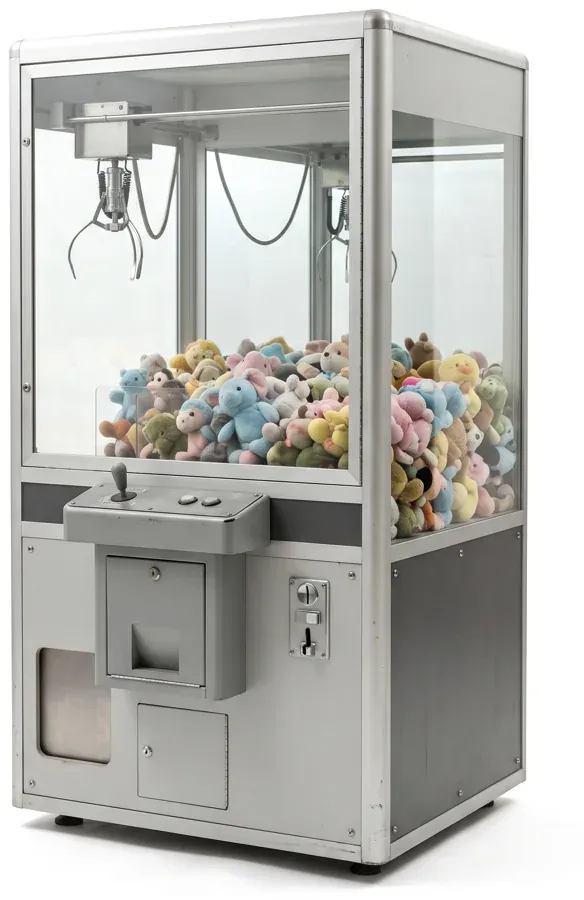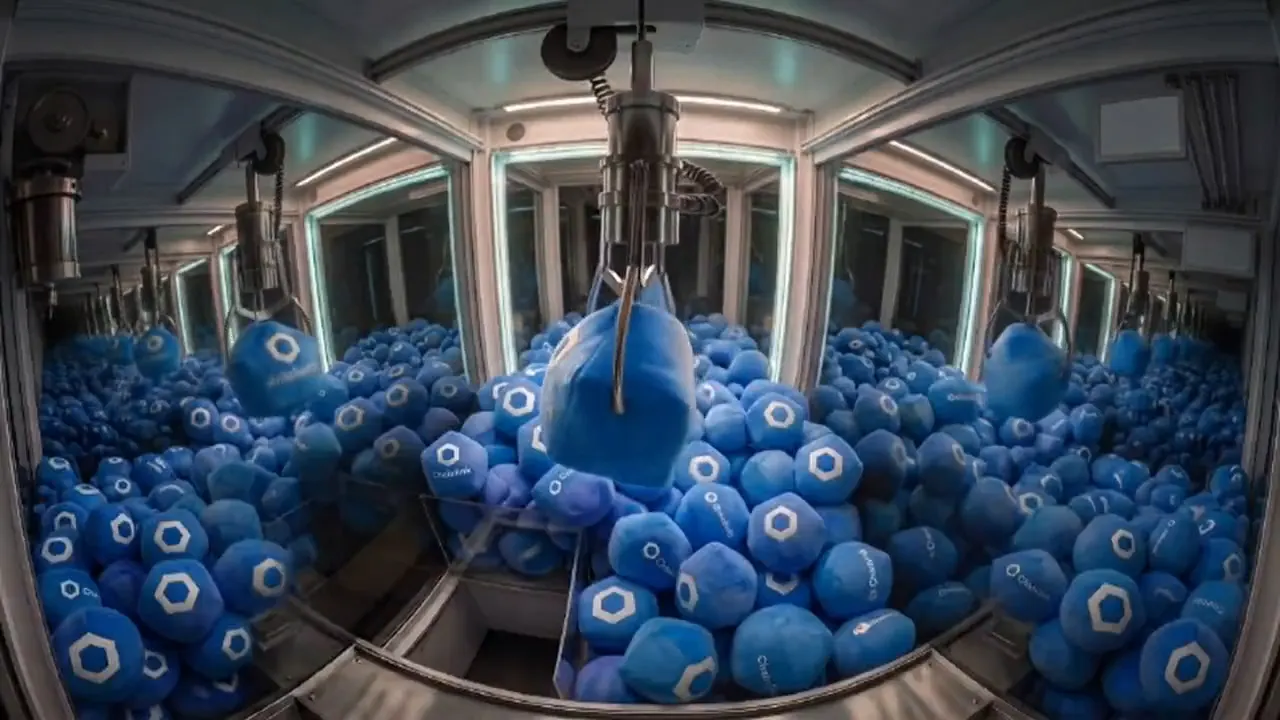
Every play hits one counter, and revenue only counts when three records agree: the machine's, the bank's and the operator's.
A claw machine can't round up or have a good feeling about the month. It adds one to a counter every time someone plays, and this post follows one play from the coin slot to the number you can check yourself.
- 01The counterLogs every play, coin or card.
- 02peaqTies each reading to one machine.
- 03ChainlinkNodes capture it and agree on it.
- 04The checkMachine, bank and operator have to match.
What gets recorded when someone plays?
Every play hits the same counter on the machine's board, whether it's paid with coins, a card or a phone. The machine records the play, the cycle, the uptime hour and the money, and it reports all of that through the machine vendor's system. The operator doesn't type in any of those numbers.
Who signs the data?
The data isn't signed on the machine's board. peaq gives each of the 200 machines its own onchain Machine ID, so every reading is tied to one specific machine, and the ID isn't a key held on the device. The readings come from the vendor's API with that ID attached.
Who checks it?
A Chainlink CRE network, from launch. It captures each machine's data from its API, with independent nodes reading the same data and agreeing on it before it's recorded onchain. At the end of each month it reconciles what the machines reported against the revenue collected and the lease paid, and the first month's figures go up on the Dashboard in the side menu, marked coming soon until then. Cash flow only counts when the machine data, the bank data and the operator's report agree. If they disagree, the gap shows.
What about cash?
Coins go through the same counter as cards. A card or phone payment also leaves a record with the payment processor, and a coin doesn't, so for coin plays the counter on the board is checked against the operator's own payment records. That's why the three-way check matters. An operator who wanted to under-report cash would have to make their own records disagree with a counter they don't control. And because the lease is set, under-reporting wouldn't lower what the operator owes.
How do I check it myself?
On the Uptime page and on Solscan. Each machine's plays, uptime and revenue are on the Uptime page, updated as the machines report. Every month NAV is attested onchain and pinned to IPFS, and the holder snapshot is reconciled to mint supply before any payout, so anyone can rebuild the snapshot and check a payment on Solscan.
A play hits the counter, the vendor's system reports it with the machine's peaq ID, Chainlink's nodes capture it and reconcile it monthly against the bank and the operator's report, and only what agrees gets counted. Then the lease is paid and you can check that too. DualMint has paid depositors every month since May 2025 with zero operator defaults, and Bill and I have both deposited.
If you want in
The raise is closed and PLAY trades on Solana. Look at the machines on the Uptime page, then buy or sell there.
Targets and past distributions are not promises. PLAY carries risk, including loss of capital and limited liquidity in the Meteora pool. Not financial advice.